
LISTEN2ACT
Listening to children to prevent violence
Preventing violence starts by listening to children and young people.
Listen2Act is a project by Instituto de Apoio à Criança that engages children and young people in reflecting on violence and corporal punishment and in developing positive, non-violent approaches to education.

Why was Listen2Act created?
Violence against children can take many forms and is not always recognised as such. Corporal punishment is still often seen as a form of discipline or education.
Listen2Act starts from a simple idea: to prevent violence, we also need to listen to children and young people.
The project seeks to understand their perceptions and experiences and actively involve them in creating content and tools that promote positive, non-violent approaches to education.
From listening to action
Listen2Act places the participation of children and young people at the heart of the process: it starts by listening to their perspectives and turns their participation into tools to prevent violence.
LISTEN & CO-CREATE
Create safe spaces to listen to children and young people and turn their ideas, experiences and perspectives into stories and awareness-raising content.
EMPOWER
Give children and young people an active role in preventing violence and raising awareness among their peers.
ENGAGE FAMILIES
Raise families’ awareness of the consequences of corporal punishment and promote positive, non-violent approaches to education.
TRAIN PROFESSIONALS
Develop a 10-module online training programme, based on IAC’s Nem Mais Uma Palmada initiative, for professionals working with children and families.
We started by listening
Before creating the content, we wanted to understand how children and young people perceive and experience violence and corporal punishment.
6
Focus Group
34
Children and Young People
3
Cities
Lisboa · Coimbra · Évora
The focus groups created safe, participatory spaces to listen to children and young people of different ages and backgrounds and gather their perspectives on violence and forms of discipline.
Three stories. Everyday situations. Non-violent responses.
Drawing on the voices and participation of children and young people, three stories were created around everyday family situations involving conflict, boundaries and challenges in parent-child relationships.
Young people took part in creating the scripts and lent their voices to the characters in the videos.
Alice

A tantrum at the supermarket
Alice is a young child who has a tantrum at the supermarket. How can adults handle the situation, set boundaries and respond without resorting to violence?
Joana
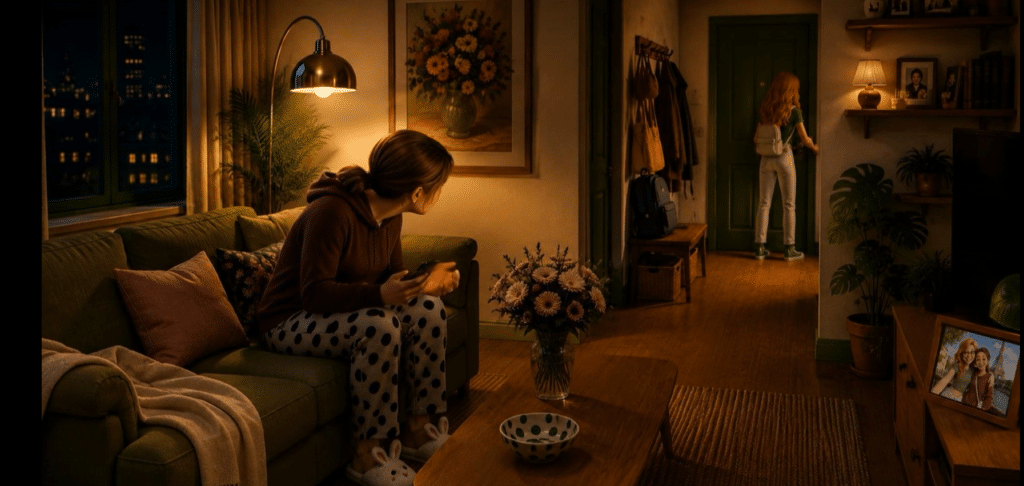
When agreed times are not respected
Joana is a teenager who comes home later than agreed with her mother. How can adults deal with concern, conflict and boundaries in a non-violent way?
Manel

Just five more minutes…
Manel does not stick to the agreed time for playing video games. How can adults maintain rules and boundaries while promoting dialogue and respect?
What we learned by listening
Listening to children and young people showed us that talking about violence also means questioning what is sometimes considered “normal” in education.
Not all children recognise violence in the same way
Perceptions of violence and corporal punishment vary and can be influenced by children’s and young people’s own experiences.
Creating safe spaces makes a difference
A safe, child-friendly environment makes it easier for children to express their opinions, experiences and questions about sensitive issues.
Participation is more than being heard
Involving children and young people in developing responses helps turn their perspectives into concrete tools for prevention.
Listening is the first step towards action
Listen2Act – Listening to children to prevent violence
A project implemented in Portugal by Instituto de Apoio à Criança, within the Daphne-CHILD programme.